
Deep Dive: LightRAG Retrieval & Query Modes
Phân tích chi tiết từ báo cáo Tổng quan LightRAG — từ user query đến final prompt/context.
Tổng quan Intro
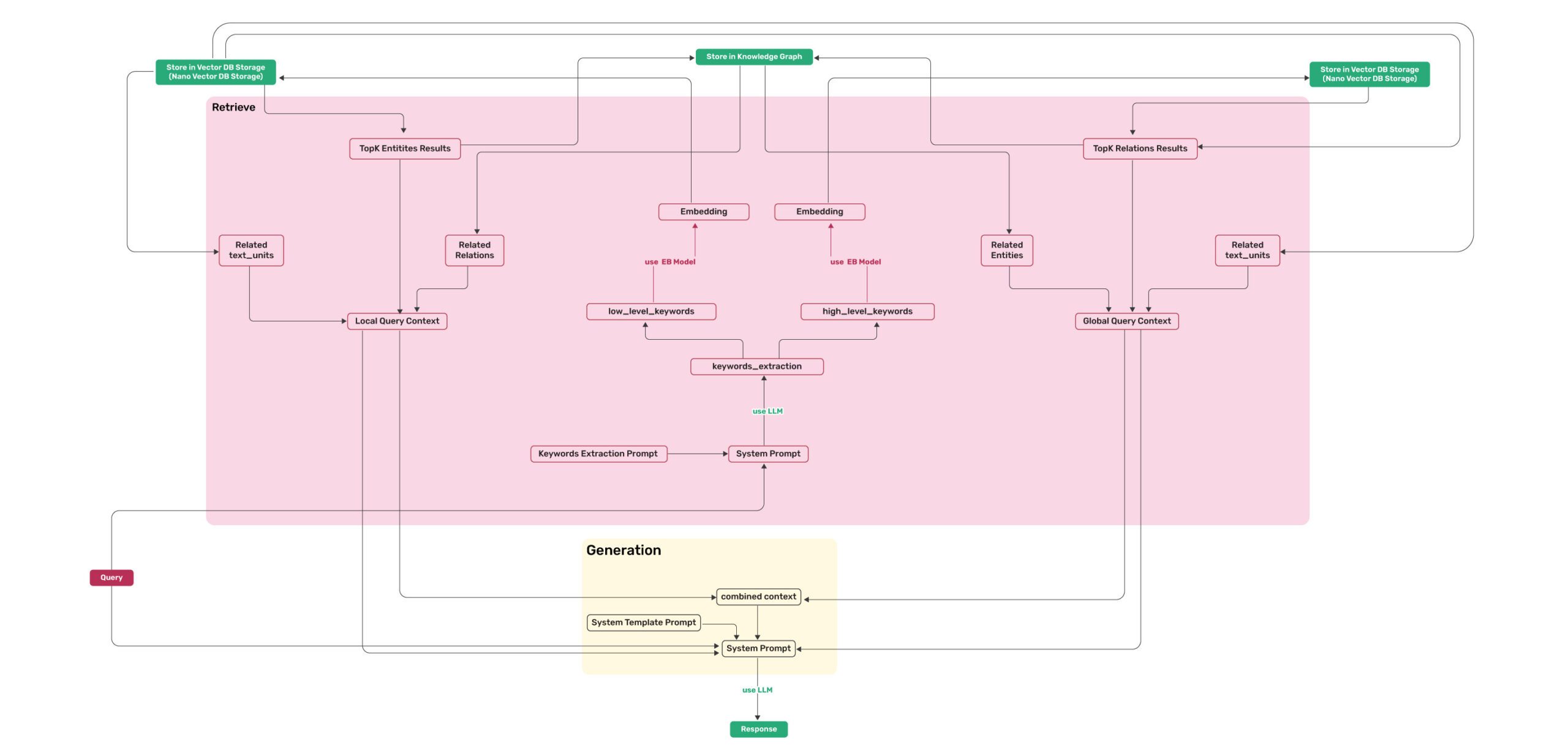
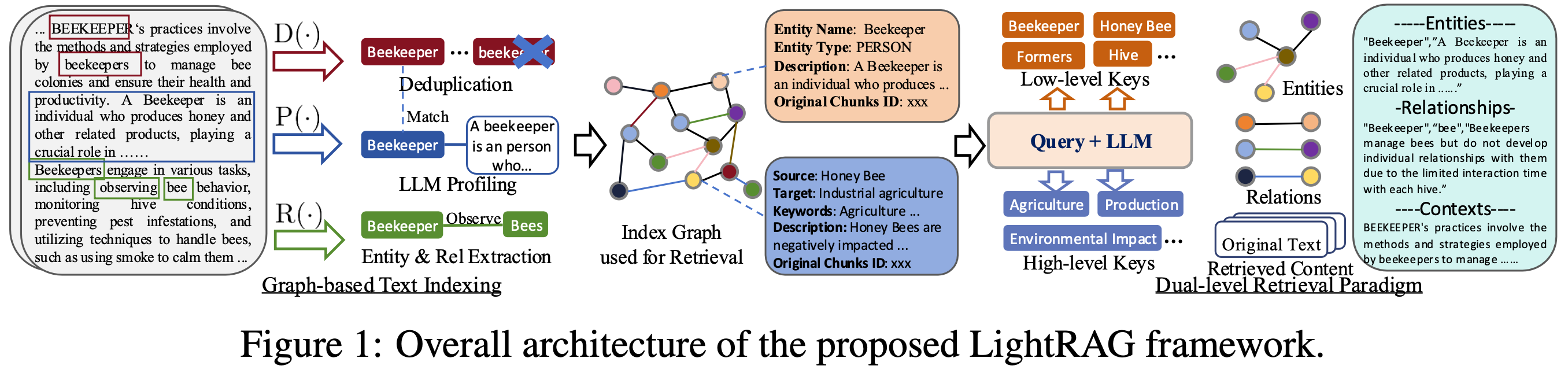
Retrieval là phần LightRAG biến graph artifact thành context cho LLM. Query được phân tích thành low-level keywords và high-level keywords, tìm candidates trong entity/relationship vector stores, bổ sung neighbors/chunks từ graph, rồi compile thành context có token budget.
Docs và source có một khác biệt đáng chú ý: một số docs cũ mô tả default mode là
global, nhưng source snapshot v1.4.15 đặt QueryParam.mode = "mix".
Khi viết app, hãy kiểm tra source/package version thay vì chỉ dựa vào snippet cũ.
Query modes Modes
| Mode | Retrieval source | Nên dùng khi nào | Rủi ro |
|---|---|---|---|
naive | Direct vector chunks | Baseline nhanh, corpus nhỏ, debug vector search | Bỏ qua entity/relation graph |
local | Entity VDB + related graph data | Câu hỏi detail về entity cụ thể | Có thể thiếu broader context |
global | Relationship VDB + related entities | Câu hỏi topic/theme rộng | Có thể thiếu fact cụ thể |
hybrid | Local + global graph branches | Cân bằng entity và relationship | Không lấy direct vector chunks như mix |
mix | Hybrid graph + direct vector chunks | Default thực dụng cho production | Nhiều candidates hơn, cần rerank/token control |
bypass | Không retrieval | Test LLM hoặc custom prompt | Không grounded vào corpus |
Retrieval internals Code
1. Keyword extraction tách low-level và high-level intent
R.1lightrag/operate.py:get_keywords_from_query
LightRAG không search bằng raw query duy nhất. Nó chuyển query thành hai nhóm keywords
để điều hướng retrieval: low-level cho entity cụ thể, high-level cho relationships/themes.
User query:
"How do electric vehicles affect urban air quality and transportation infrastructure?"
Low-level keywords:
electric vehicles, urban air quality, transportation infrastructure
High-level keywords:
environmental impact, infrastructure planning, policy trade-offs
Ưu điểm
- Tách intent giúp local/global branches hoạt động đúng vai trò.
- Có thể truyền sẵn
hl_keywords/ll_keywordstrong QueryParam để debug. - Giảm phụ thuộc vào một vector query duy nhất.
Nhược điểm
- Thêm LLM call trước retrieval nếu keywords không được truyền sẵn.
- Keyword extraction sai sẽ kéo sai candidate graph.
- Cần prompt/model đủ tốt cho domain-specific terminology.
2. Local/global branches truy vấn entity và relationship VDB
R.2lightrag/operate.py:_perform_kg_search
Graph retrieval vẫn bắt đầu bằng vector search. LightRAG không brute-force graph.
Nó dùng vector DB để chọn entity/relation candidates, sau đó mới dùng graph để mở rộng context.
Branch selection trong _perform_kg_search
PY
if query_param.mode == "local" and len(ll_keywords) > 0:
    local_entities, local_relations = await _get_node_data(
        ll_keywords,
        knowledge_graph_inst,
        entities_vdb,
        query_param,
        query_embedding=ll_embedding,
    )
elif query_param.mode == "global" and len(hl_keywords) > 0:
    global_relations, global_entities = await _get_edge_data(
        hl_keywords,
        knowledge_graph_inst,
        relationships_vdb,
        query_param,
        query_embedding=hl_embedding,
    )
else:
    # hybrid or mix: run both branches
Tối ưu đáng chú ý: source batch pre-compute embeddings cho query, low-level keywords
và high-level keywords trong một call nếu cần. Điều này tránh 2-3 round-trip embedding tuần tự.
3. Mix mode thêm vector chunks và round-robin merge
R.3lightrag/operate.py:3694-4053
mix giữ lại lợi ích của NaiveRAG. Dù graph có ích, nhiều câu hỏi vẫn cần
đoạn text raw. Mix mode lấy thêm chunks từ chunks_vdb, rồi merge với chunks liên quan
đến entities và relations.
Round-robin merge chunks từ ba nguồn
PY
max_len = max(len(vector_chunks), len(entity_chunks), len(relation_chunks))
for i in range(max_len):
    if i < len(vector_chunks):
        # source C: direct vector chunk
        merged_chunks.append(vector_chunks[i])
    if i < len(entity_chunks):
        # source E: entity-related chunk
        merged_chunks.append(entity_chunks[i])
    if i < len(relation_chunks):
        # source R: relation-related chunk
merged_chunks.append(relation_chunks[i])| Source | Trong log | Ý nghĩa |
|---|---|---|
| Direct vector chunks | C | Semantic chunks từ raw query, giống NaiveRAG branch |
| Entity-related chunks | E | Chunks liên quan đến entity candidates từ local branch |
| Relation-related chunks | R | Chunks liên quan đến relation candidates từ global branch |
4. Context compiler áp token budget theo stage
R.4lightrag/operate.py:_build_query_context, _build_context_str
Candidate nhiều không đồng nghĩa context tốt. LightRAG tách search và context build.
Sau khi có entity/relation/chunk candidates, nó truncate theo token budget rồi build prompt cuối.
4-stage query context architecture
PY
# _build_query_context()
search_result = await _perform_kg_search(...)
truncation_result = await _apply_token_truncation(search_result, query_param, ...)
merged_chunks = await _merge_all_chunks(
    filtered_entities=truncation_result["filtered_entities"],
    filtered_relations=truncation_result["filtered_relations"],
    vector_chunks=search_result["vector_chunks"],
    ...
)
context, raw_data = await _build_context_str(
    truncation_result["entities_context"],
    truncation_result["relations_context"],
    merged_chunks,
    query,
    query_param,
    ...
)
Debug tip: dùng
only_need_context=True để xem context thật trước khi LLM
generate answer. Đây là cách nhanh nhất để biết lỗi nằm ở retrieval hay generation.
5. Rerank và references là quality/trace layer
R.5lightrag/rerank.py; docs/AdvancedFeatures.md
Rerank giúp mix mode không bị quá rộng. Khi retrieval lấy candidates từ graph và chunks,
reranker có thể lọc lại chunks trước khi đưa vào LLM. References giúp response có trace về source path.
Rerank chunking guard
PY
if enable_chunking:
    documents, doc_indices = chunk_documents_for_rerank(
        documents, max_tokens=max_tokens_per_doc
    )
    if top_n is not None:
        top_n = None  # aggregate document scores after chunk-level rerank
Failure modes Pitfalls
| Failure mode | Triệu chứng | Cách xử lý |
|---|---|---|
| Keyword extraction lệch | Context trả entity/relation không liên quan | Log/inspect hl_keywords/ll_keywords, thử truyền keywords thủ công |
| Entity aliases phân mảnh | Graph có nhiều node gần trùng nghĩa | Tighten entity types/prompt; review graph bằng WebUI; cân nhắc normalization ngoài pipeline |
| Chunks chiếm hết context | Answer giống NaiveRAG, ít relation reasoning | Giảm chunk_top_k, bật rerank, tăng budget cho entity/relation |
| Relation VDB noisy | High-level query trả broad nhưng shallow | Tune extraction prompt/model; kiểm tra relation keywords và description |
| Embedding mismatch | Query lỗi schema/dimension hoặc trả kết quả rỗng | Không đổi embedding sau index; recreate vector storage nếu đổi model |
Tổng kết Wrap
Retrieval takeaways
-
mixlà mode nên bắt đầu vì kết hợp graph và vector chunks. - LightRAG query context là pipeline 4 stage; debug từng stage sẽ nhanh hơn debug answer cuối.
- Rerank không phải garnish; với corpus lớn, nó là quality gate để giảm noise.
- Nếu query cần exact audit, luôn inspect references/raw context trước khi tin output.