
Deep Dive: LightRAG Indexing Pipeline
Phân tích chi tiết từ báo cáo Tổng quan LightRAG — document ingestion đến graph/vector index.
Tổng quan Intro
Indexing trong LightRAG là bước biến tài liệu thô thành một graph artifact có thể query. Nếu NaiveRAG coi document là tập chunks, LightRAG coi document là nguồn để sinh entity nodes, relation edges, entity/relation vector records, text chunks và doc processing state.
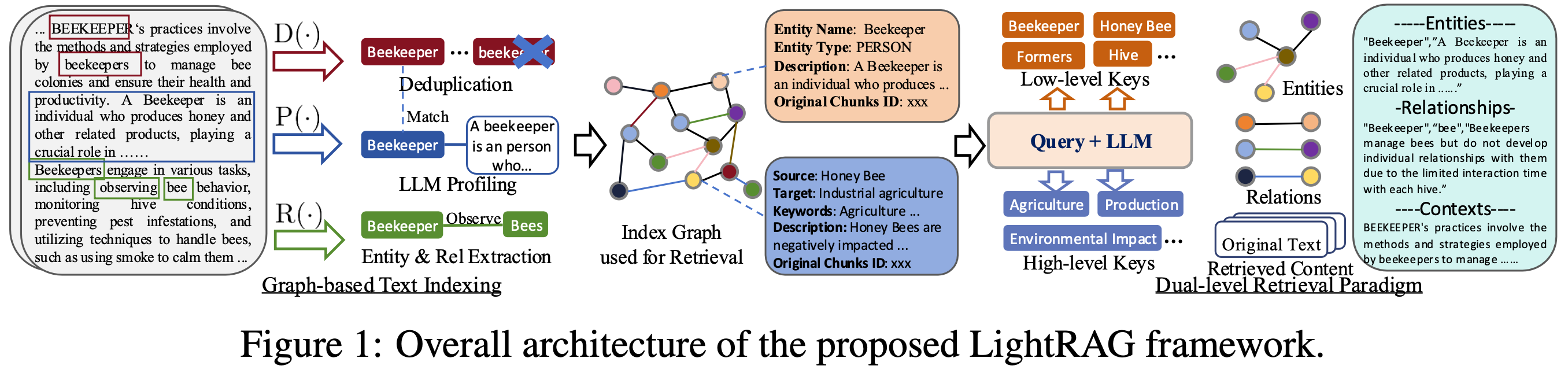
Quan sát quan trọng: LightRAG không rebuild toàn graph khi có document mới. Nó
extract graph fragment của document mới rồi merge vào graph hiện tại bằng source IDs, descriptions
và vector records. Đây là phần làm nó phù hợp hơn GraphRAG cho knowledge base động.
Flow tổng thể Flow
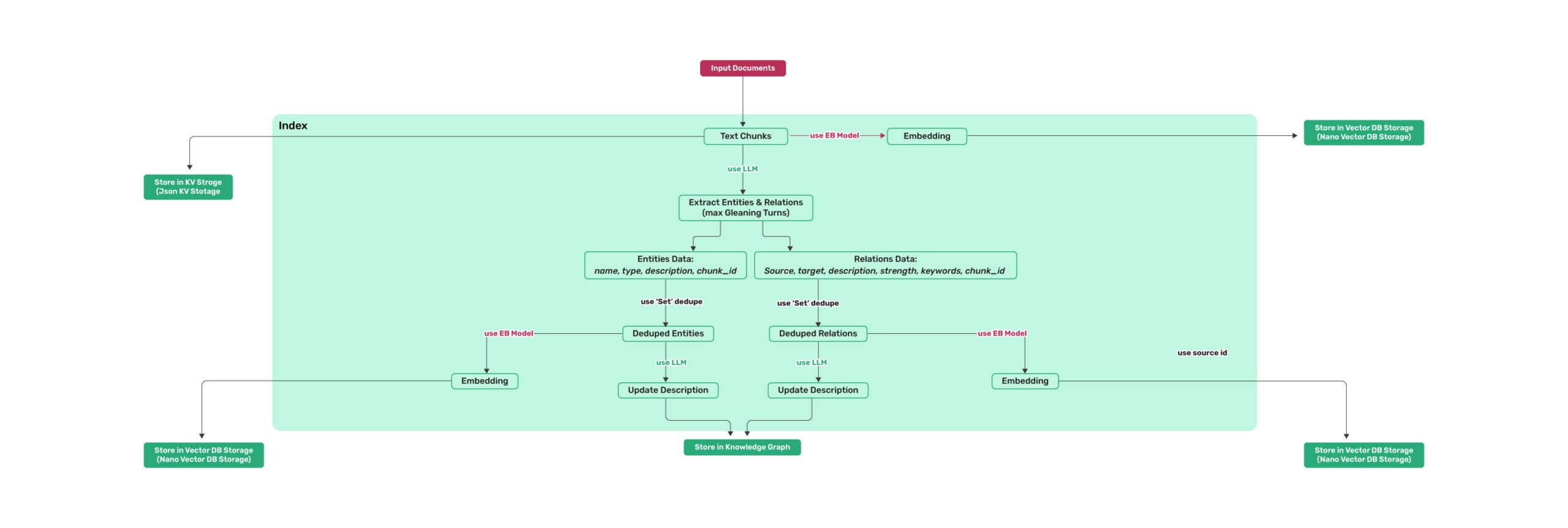
insert / ainsert
-> apipeline_enqueue_documents()
-> doc_status: PENDING
-> apipeline_process_enqueue_documents()
-> chunking_by_token_size()
-> chunks_vdb.upsert()
-> extract_entities()
-> merge_nodes_and_edges()
-> graph.upsert_node / graph.upsert_edge
-> entities_vdb / relationships_vdb upsert
-> doc_status: PROCESSED
Pipeline internals Code
1. Enqueue + document status là checkpoint layer
I.1lightrag/lightrag.py:1201-1270, 1760-1872
Indexing không nên là một hàm fire-and-forget. LightRAG tách enqueue và process,
có track id, doc status, pipeline busy flag và cancellation flag. Đây là khác biệt lớn khi đưa RAG
vào server có upload nhiều file.
insert chỉ bọc ainsert và trả track_id
PY
async def ainsert(
    self,
    input: str | list[str],
    split_by_character: str | None = None,
    split_by_character_only: bool = False,
    ids: str | list[str] | None = None,
    file_paths: str | list[str] | None = None,
    track_id: str | None = None,
) -> str:
    if track_id is None:
        track_id = generate_track_id("insert")

    await self.apipeline_enqueue_documents(input, ids, file_paths, track_id)
    await self.apipeline_process_enqueue_documents(
        split_by_character, split_by_character_only
    )
    return track_id
Ưu điểm
- Có thể monitor tiến trình insert qua track id và doc status.
- Failed/pending/processing docs có thể được retry bởi pipeline.
- Pipeline lock ngăn nhiều worker cùng mutate graph một cách nguy hiểm.
Nhược điểm
- Phức tạp hơn một ingestion script đơn giản.
- Nếu doc_status bị corrupt, cần consistency check/recovery logic.
- Cần expose status rõ ở API/UI để user hiểu file đang ở stage nào.
2. Chunking giữ thứ tự và source path
I.2lightrag/operate.py:88-126
Chunking là nơi quyết định granularity của graph. Chunk quá lớn làm extraction khó;
chunk quá nhỏ làm relation bị mất context. LightRAG default 1200 tokens và overlap 100 tokens.
Token chunking
PY
for index, start in enumerate(
    range(0, len(tokens), chunk_token_size - chunk_overlap_token_size)
):
    chunk_content = tokenizer.decode(tokens[start : start + chunk_token_size])
    results.append(
        {
            "tokens": min(chunk_token_size, len(tokens) - start),
            "content": chunk_content.strip(),
            "chunk_order_index": index,
        }
)| Parameter | Default/ý nghĩa | Rủi ro nếu sai |
|---|---|---|
chunk_token_size | 1200 tokens trong docs/paper experiments | Quá lớn làm LLM extraction bỏ sót; quá nhỏ phá relation context |
chunk_overlap_token_size | 100 tokens | Overlap thấp mất continuity; overlap cao tăng chi phí indexing |
file_paths | Metadata citation/source tracking | Thiếu source path làm references và deletion/rebuild khó audit |
split_by_character_only | Cho custom documents | Nếu chunk vẫn vượt limit thì pipeline phải fail rõ thay vì âm thầm truncate |
3. Entity/relation extraction parser được harden cho output lỗi
I.3lightrag/operate.py:937-1062
LLM extraction không bao giờ sạch tuyệt đối. Source code LightRAG dành nhiều logic để sửa delimiter corruption,
normalize relation/entity marker và warning khi missing completion delimiter. Đây là dấu hiệu hệ thống đã va chạm thực tế.
Parser sửa delimiter và tách entity/relation records
PY
record = fix_tuple_delimiter_corruption(record, delimiter_core, tuple_delimiter)
record_attributes = split_string_by_multi_markers(record, [tuple_delimiter])

entity_data = _handle_single_entity_extraction(
    record_attributes, chunk_key, timestamp, file_path
)
if entity_data is not None:
    truncated_name = _truncate_entity_identifier(
        entity_data["entity_name"],
        DEFAULT_ENTITY_NAME_MAX_LENGTH,
        chunk_key,
        "Entity name",
    )
    maybe_nodes[truncated_name].append(entity_data)
    continue

relationship_data = _handle_single_relationship_extraction(
    record_attributes, chunk_key, timestamp, file_path
)
Prompt engineering chưa đủ. Production graph extraction cần cả parser hardening,
length limits, source tracking và observable warnings. Nếu chỉ tin output LLM đúng format, graph sẽ hỏng âm thầm.
4. Merge nodes/edges vừa cập nhật graph vừa cập nhật vector records
I.4lightrag/operate.py:1623-1770, 1430-1596
Graph và vector index phải nhất quán. Node/edge được merge trong graph nhưng cũng phải có vector record tương ứng để retrieval tìm được entity/relation bằng semantic query.
Relationship merge tạo content cho relationship VDB
PY
rel_vdb_id = compute_mdhash_id(src + tgt, prefix="rel-")
rel_content = f"{combined_keywords}\t{src}\n{tgt}\n{final_description}"
vdb_data = {
    rel_vdb_id: {
        "src_id": src,
        "tgt_id": tgt,
        "source_id": updated_relationship_data["source_id"],
        "content": rel_content,
        "keywords": combined_keywords,
        "description": final_description,
        "weight": weight,
        "file_path": updated_relationship_data["file_path"],
    }
}
await relationships_vdb.upsert(vdb_data)
Ưu điểm
- Graph traversal và vector retrieval cùng nhìn một semantic artifact.
- Descriptions được dedupe/summarize giúp relation content cô đọng hơn raw chunks.
- Source IDs và file paths giữ khả năng trace về document/chunk gốc.
Nhược điểm
- Nếu graph write thành công nhưng vector write fail, retrieval có thể mất entity/relation.
- Merge nhiều aliases của cùng entity vẫn phụ thuộc naming quality từ LLM.
- Description summary dùng LLM nên có thể drift nếu model không ổn định.
5. Incremental update: union graph fragment thay vì rebuild toàn cục
I.5Paper §3.1; lightrag/lightrag.py delete/rebuild paths
Đây là lợi thế chính so với GraphRAG trong data động. GraphRAG có community reports nên update mới có thể kéo theo regeneration; LightRAG merge entities/relations mới vào graph hiện tại.
Existing graph: G = (V, E)
New document: D'
Extracted graph: G' = (V', E')
LightRAG update:
V := merge(V, V')
E := merge(E, E')
source_ids := source_ids + new_chunk_ids
descriptions := summarize_or_append()
Deletion là phép ngược khó hơn insertion. Xóa document phải rebuild affected
entities/relations từ chunks còn lại, không chỉ xóa chunk vectors. Vì vậy LightRAG lưu
`entity_chunks` và `relation_chunks` để biết entity/relation được chống đỡ bởi nguồn nào.
Implementation recipe Recipe
- 1Prototype bằng default storage
Dùng JSON KV, NanoVectorDB, NetworkX để kiểm tra graph quality trước.
uv pip install lightrag-hku export OPENAI_API_KEY=... python examples/lightrag_openai_demo.py - 2Quan sát graph sau vài documents đầu
Chạy server/WebUI, kiểm tra entity aliases, relation noise và source paths.
uv tool install "lightrag-hku[api]" lightrag-server - 3Khóa schema trước khi scale
Chọn embedding model, dimension, entity types, chunk size và backend storage trước khi ingest corpus lớn.
EMBEDDING_MODEL=BAAI/bge-m3
EMBEDDING_DIM=1024
ENTITY_TYPES=organization,person,location,event,concept
Tổng kết Wrap
Indexing takeaways
- LightRAG indexing là graph construction pipeline, không phải chỉ embedding chunks.
- Parser hardening và source tracking là bắt buộc vì LLM extraction output không ổn định tuyệt đối.
- Incremental update là lợi thế kiến trúc, nhưng vẫn cần kiểm soát entity alias và relation noise.
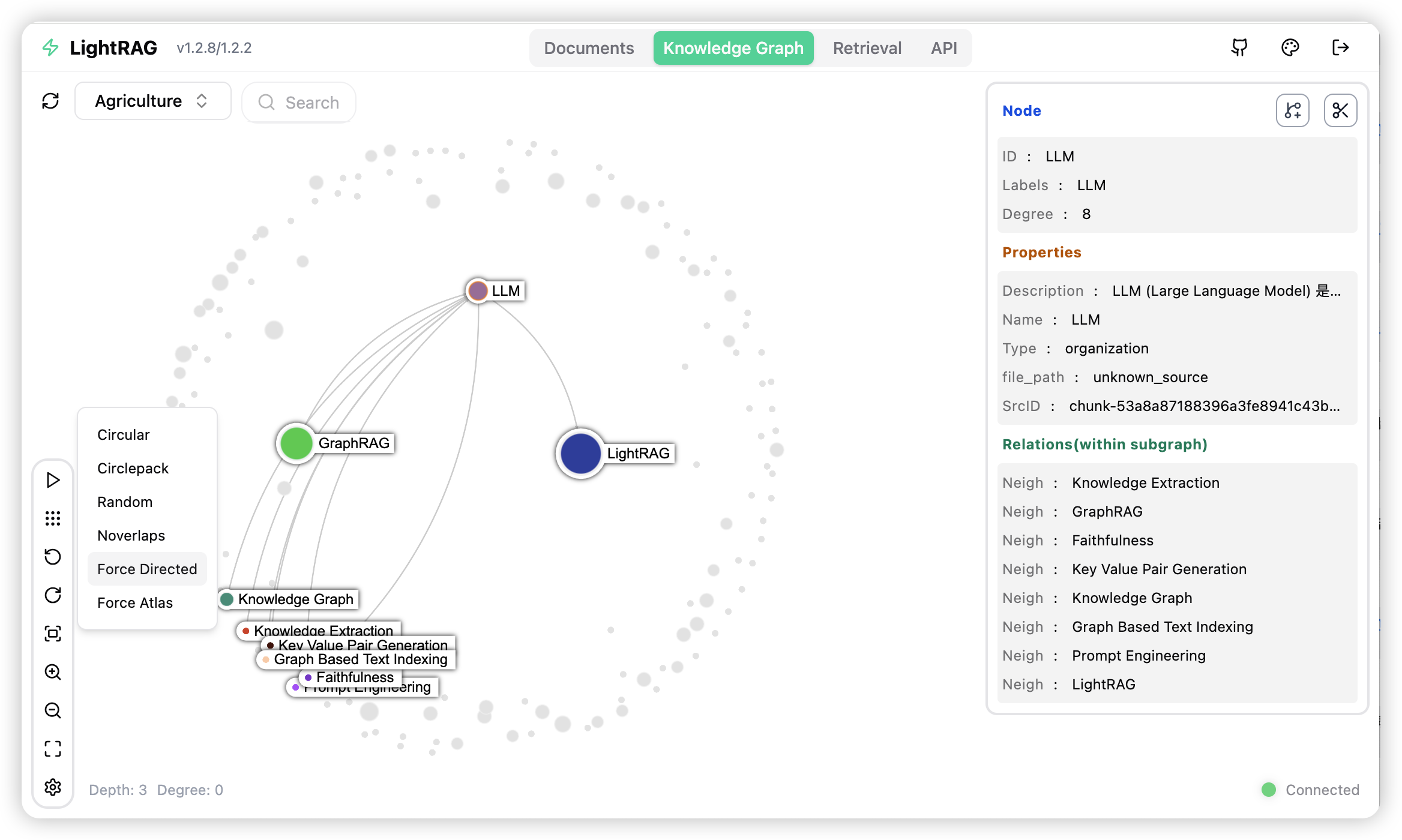
- Trước khi production, hãy dùng WebUI để inspect graph quality trên sample corpus.